Why can a leak go unnoticed for months?
Most of the pipes in a house run inside walls, under the floor or buried in the garden. When one of them leaks, the water doesn't always show: it can soak into the ground, run down a drain stack or collect in a gap in the floor slab, and stay hidden for weeks or months.
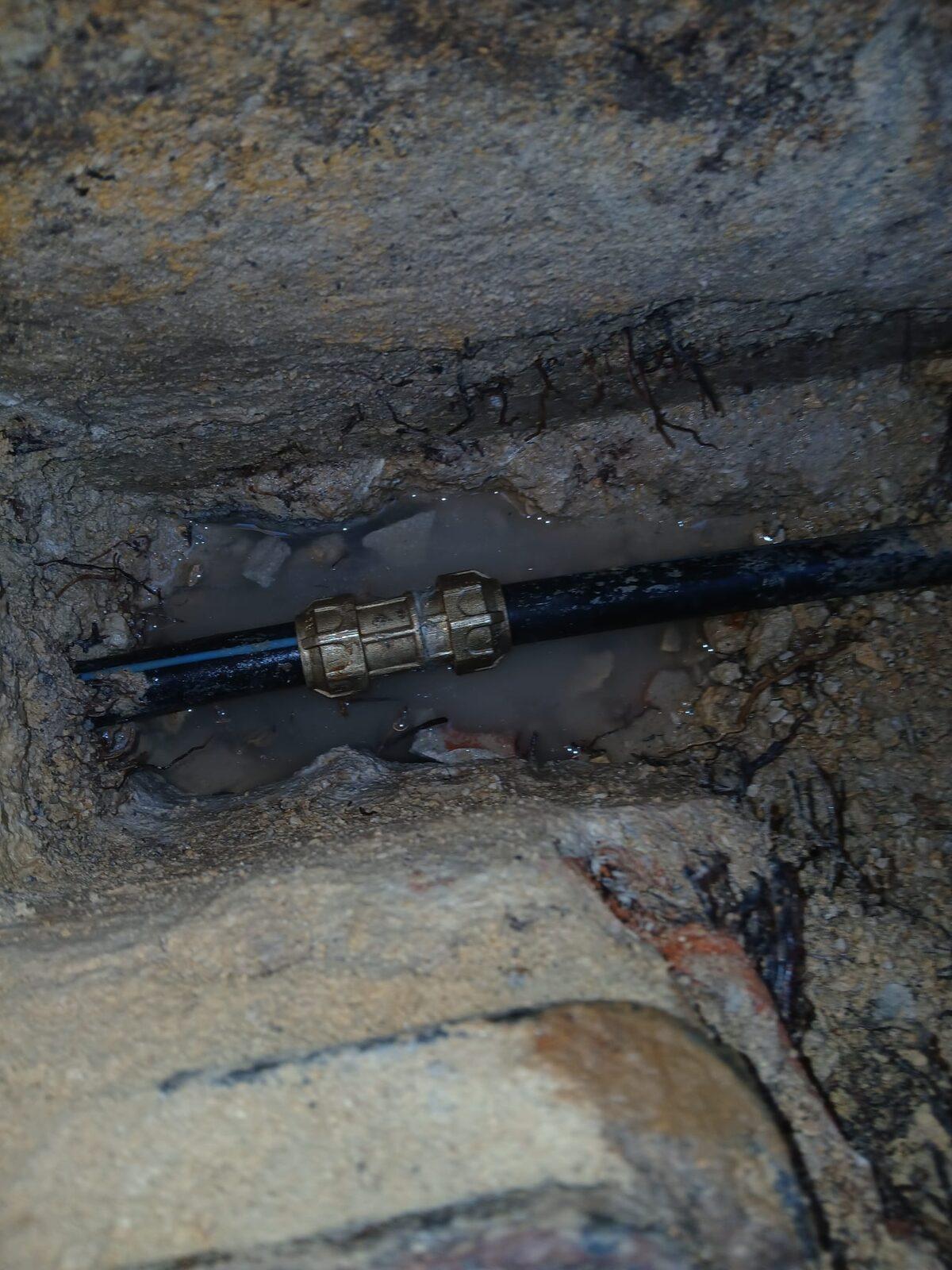
In the villas and urbanisations of La Nucía, Altea or L'Alfàs del Pi, the pipe from the meter to the house very often crosses the garden. If it breaks there, the first warning is usually the bill, not a damp patch.
7 signs you have a hidden water leak
None of these signs proves a leak on its own, but if you notice two or more at once, it's worth doing the meter test described below.
- Your water bill goes up although your habits haven't changed.
- The meter keeps turning with every tap closed.
- Damp patches or mould on walls and ceilings, especially if they are growing.
- The floor is damp, or tiles lift or sound hollow when you step on them.
- Water pressure has dropped at the taps or in the shower.
- You hear water running inside a wall or under the floor when nobody is using it.
- A patch of garden is always green or waterlogged, even in the middle of summer.
Step by step: the water meter test
It's the most reliable check you can do yourself, and you don't need any tools. It's also the first thing we do when we arrive at a property.
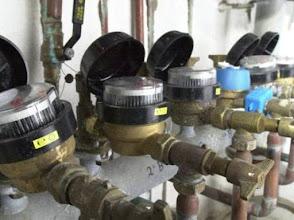
- Find your meter: in a box in the street, in a cupboard on the landing or in the bank of meters for the building.
- Turn off every tap and make sure nothing is using water: washing machine, dishwasher, automatic irrigation, pool top-up or a water softener regenerating.
- Take a photo of the reading and look at the small wheel or needle, which moves even with very small flows.
- Wait without using any water. An hour is usually enough; for small leaks, leave it overnight.
- Check again. If the reading has changed or the small wheel is turning, there is a leak between the meter and your taps.
- If you have a main stop valve where the pipe enters the house, close it and repeat. If the meter still moves, the leak is on the stretch between the meter and the house, usually buried.
What if it's just a cistern or a dripping tap?
Before assuming the worst, check the easy things. A cistern that doesn't seal properly lets a constant trickle run into the bowl, sometimes almost invisible: wipe a piece of dry toilet paper along the back of the bowl and, if it gets wet, the cistern is leaking.
A dripping tap looks harmless, but it can waste more than 10,000 litres a year. Small faults like these are usually fixed in a single general plumbing visit.
What should you do once you know there's a leak?
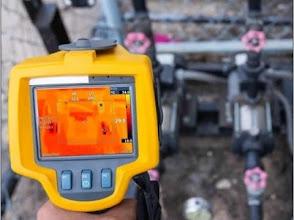
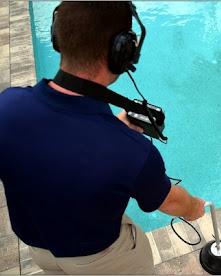
Don't start knocking holes in walls to look for it. With a pressure test, thermography, ultrasound or tracer gas, the exact spot can be marked without building work, and then we only open where the problem is.
Once it's located, the leak repair is done with minimal work. Keep your water bills: with the signed technical report we prepare, the water company can refund up to 30% of the water lost to the leak.
When should you call Fontanero Express?
If the meter moves with everything off, or you have damp patches you can't explain, call us on +34 600 58 20 20 or send a WhatsApp with a photo of the meter or the patch. We'll tell you which technique is needed and give you a fixed quote before we start. We speak English, Spanish and Swedish.
We work from La Nucía across Benidorm, Altea, Altea Hills, L'Albir, Polop, Finestrat, La Vila Joiosa and the rest of the Marina Baixa, and as far as Calpe, Jávea or Dénia for planned work. Find out more about our leak detection without building work.